It’s no ordinary day at Falls Road Library. Among the neatly packed shelves of books, people are chatting, enjoying cake and coffee and waiting with baby monitors, bicycles, blenders and even a life-size animatronic model of Frankenstein. Today the library is hosting Repair Café Belfast, a pop-up community event, where people with practical skills volunteer to help others fix their broken stuff for free.
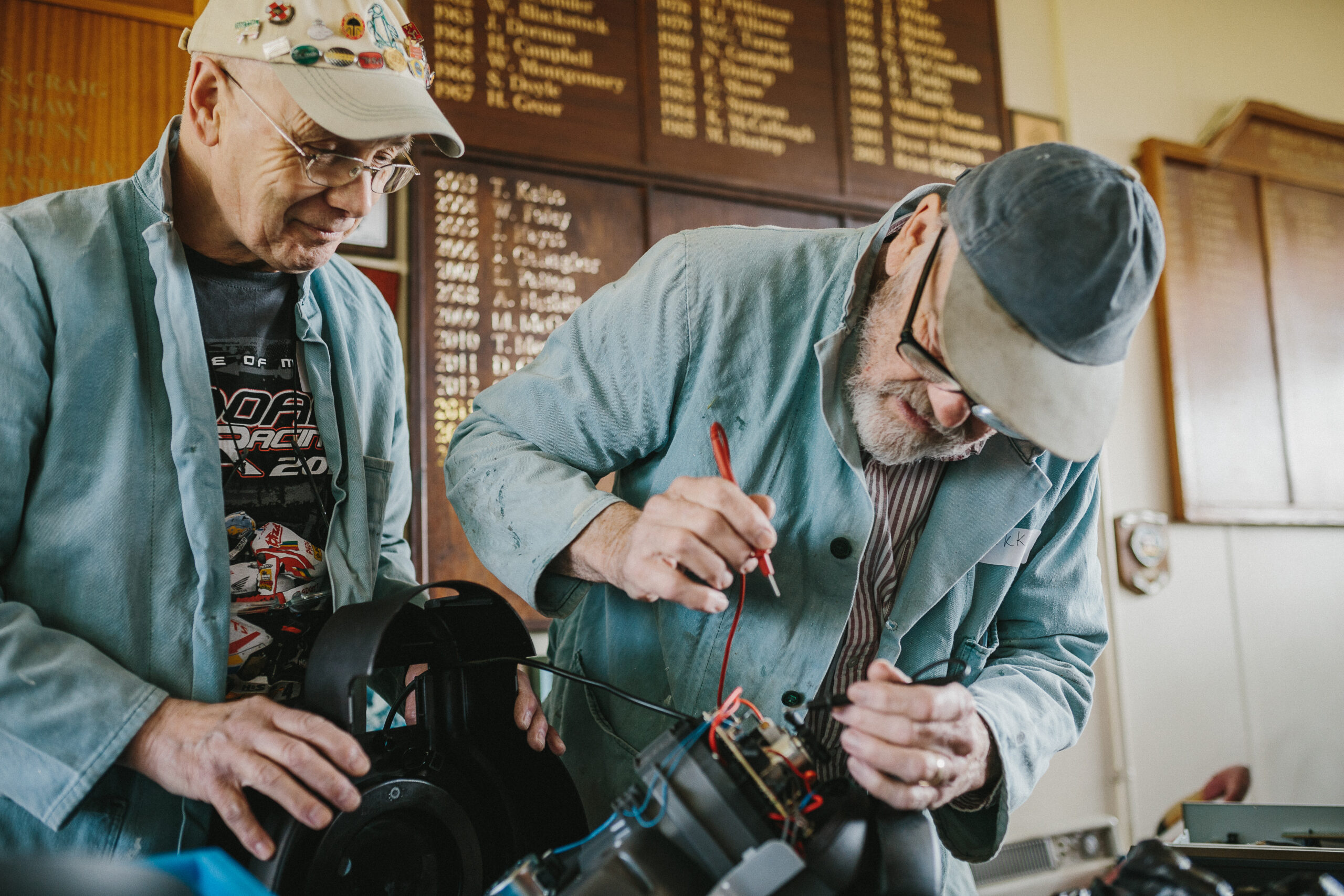
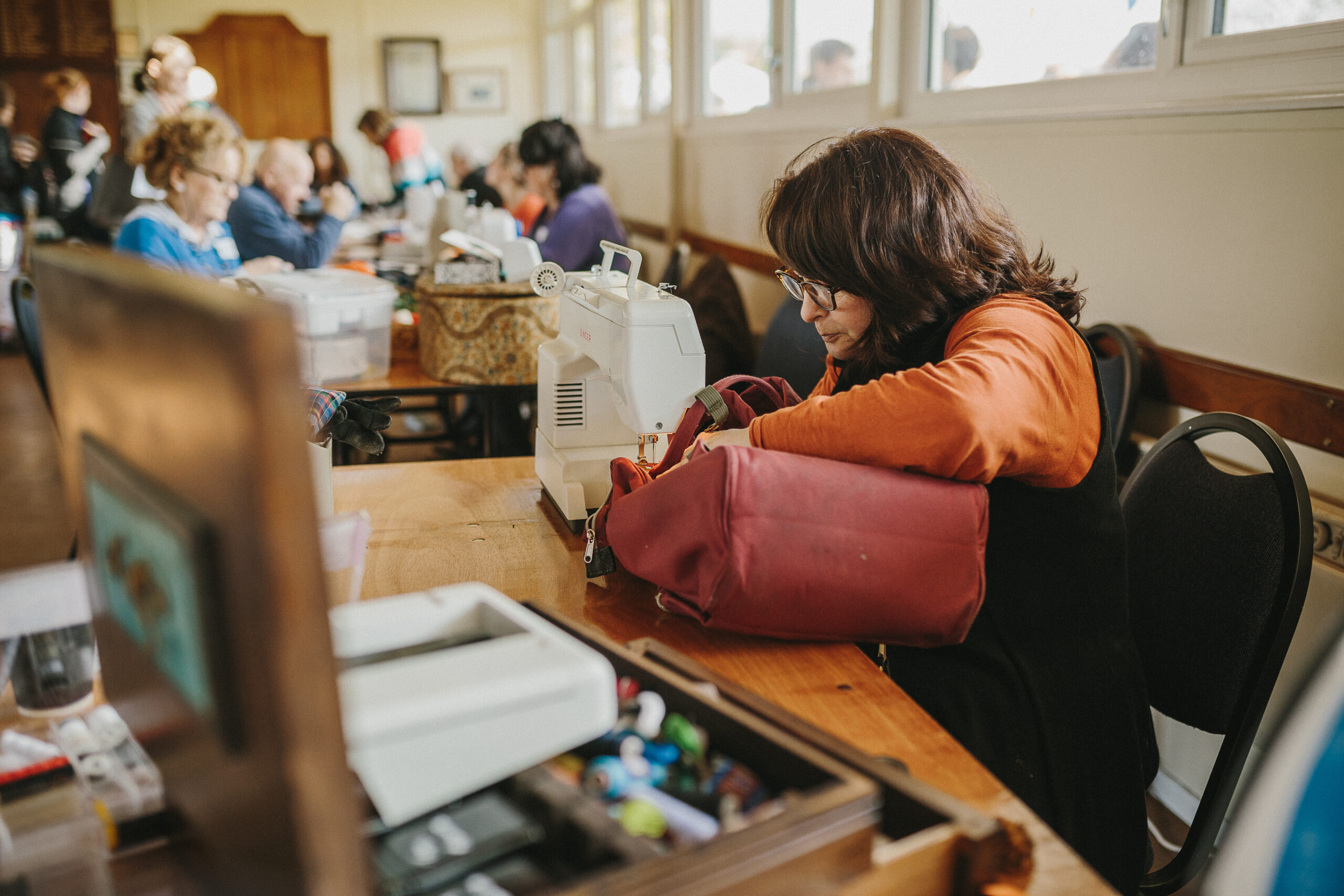
The Repair Café was started by a group of volunteers in December 2017. It’s been held in many and varied locations around Belfast since then – community and church halls, Farset Labs, a bowling pavilion and the Women’s TEC workshop, usually dedicated to teaching non-traditional skills to women. The organisers deliberately move around the city, to reach more communities and partner organisations.
The whole project operates on a pay-as-you-feel basis – there is no charge for repairs and everyone is welcome, no matter how big or small the job. While you wait to be matched with a ‘fixpert’ who has the right skills, a café with donated home-baking and freshly brewed coffee is an important part of the day. Kids can colour or craft and there’s friendly chat about what everyone’s brought and what’s broken.
Commercial repair businesses, once a presence on every high street, are closing at a rate of one a week in the UK. When something breaks, even with a relatively small or unknown fault, we hear the familiar refrain ‘it would be cheaper to buy a new one…’ though usually something cheaply made and unlikely to last. But repair cafes, now 1,800 around the world (now over 3,000), are singing a different song – one about valuing the things we own and the resources that went into them. In a small way, they are empowering people and giving choice when we can feel like passive and powerless consumers.
Sharing repair has the potential to slash our environmental impact by keeping things working for longer. As well as reducing the waste headache of disposing of broken items, it is cutting the resources needed to extract materials, make things and transport them in the first place – as your broken item gets fixed instead of replaced. Repair can make a much bigger dent in our environmental footprint than recycling.
So far, Repair Café Belfast has brought 320 items back into service (in 2025, over 2,200), everything from data projectors to giant bean bags, tandem bicycles to toys, DVD players to backpacks. For many of these items, there was nowhere else to get a repair.
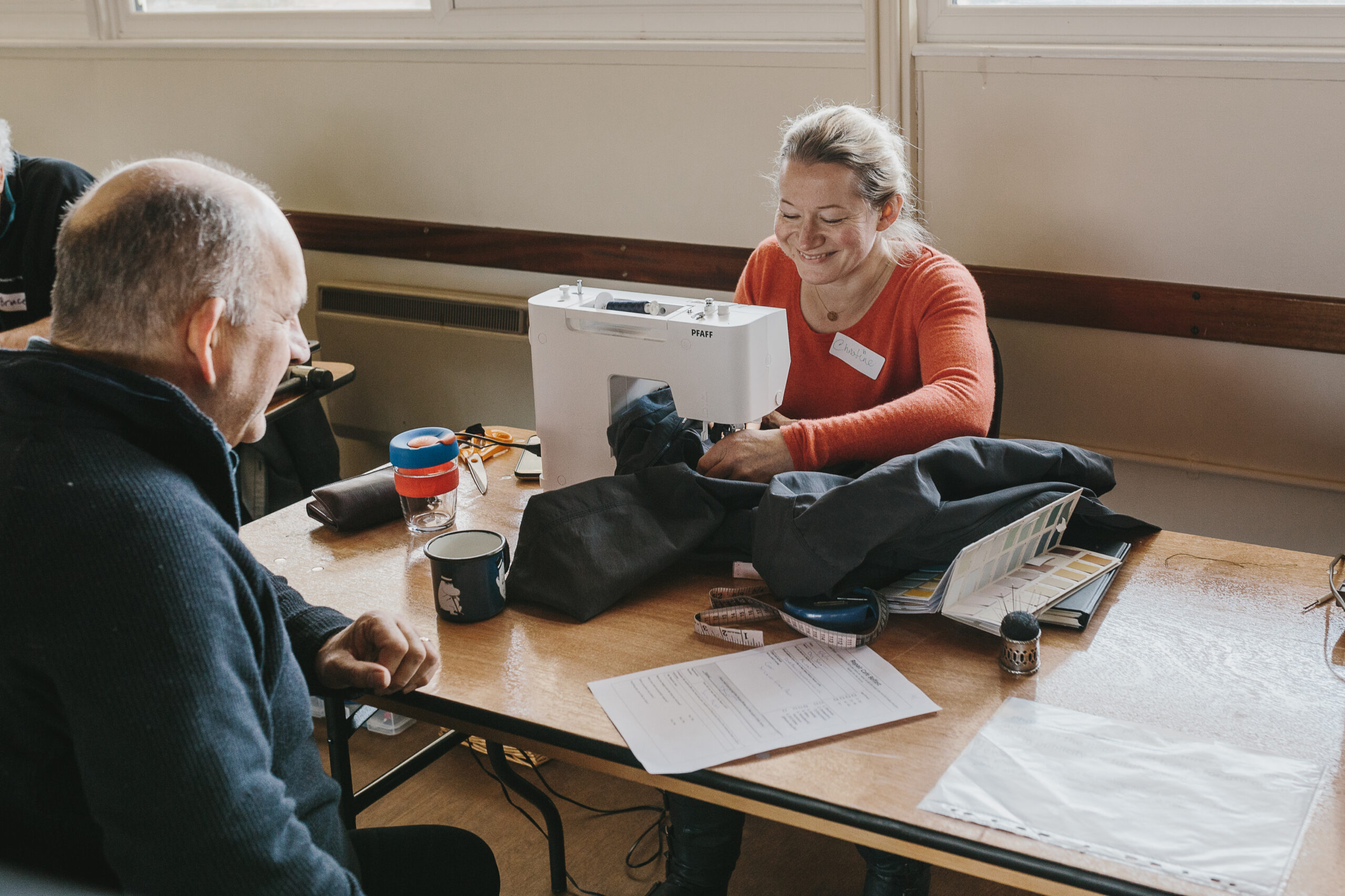
It turns out that repair is best done at a local, community level and we have a wealth of fixing talent in our community. The Repair Café has unlocked some of this skill and given volunteers a place to share it. Bruce is a leather and woodworker, who started learning at the age of 10. Jon and Rikki began as apprentice engineers in the Harland and Wolff shipyards together. Davide is a trained radar engineer from Italy who has made Belfast his home. Pat is a former home economics teacher and part of a formidable sewing team with many talented artists, teachers, upholsterers and makers among them. The project is entirely volunteer run and relies on friendly welcomers, coffee pourers and organisers just as much as repairers.
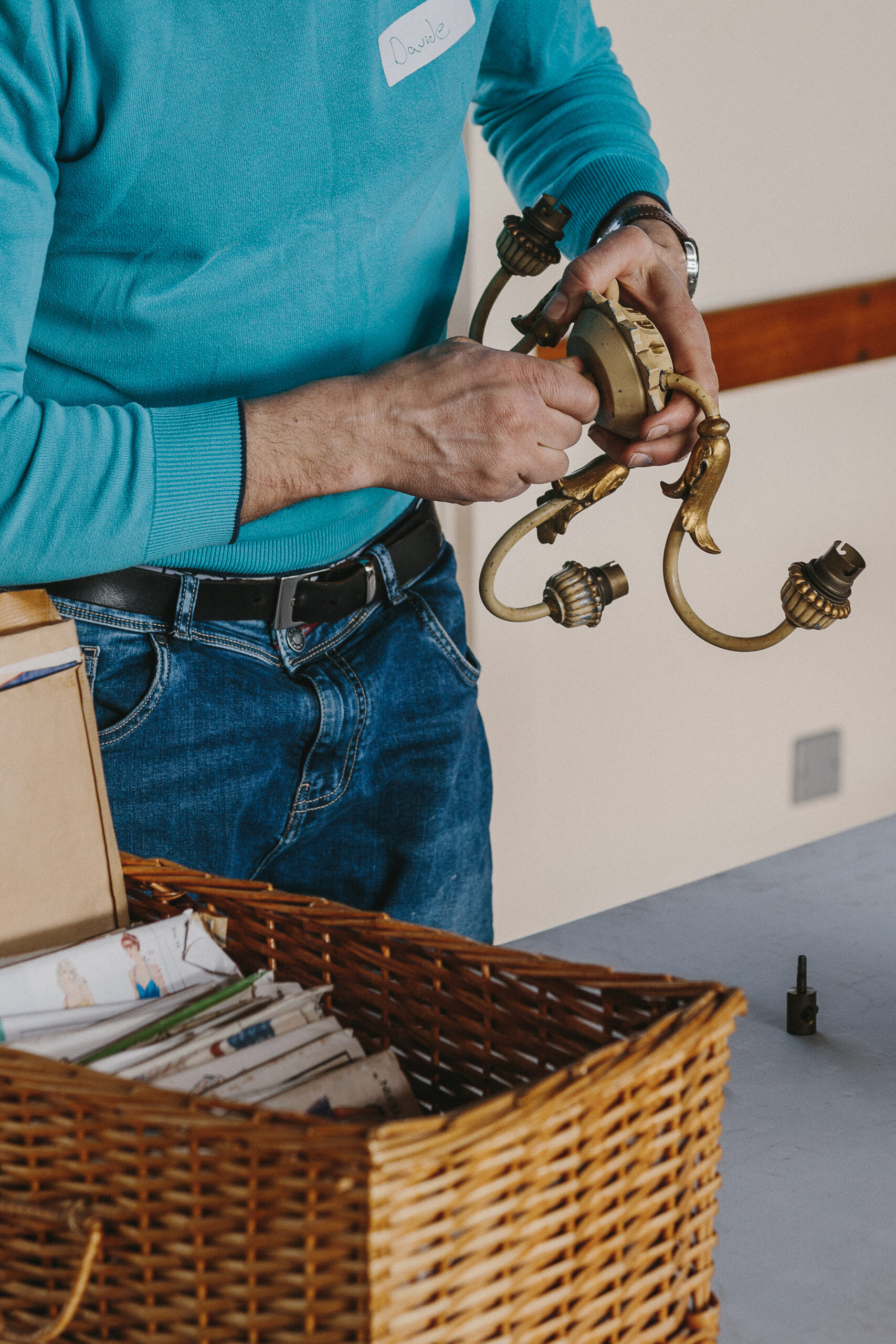
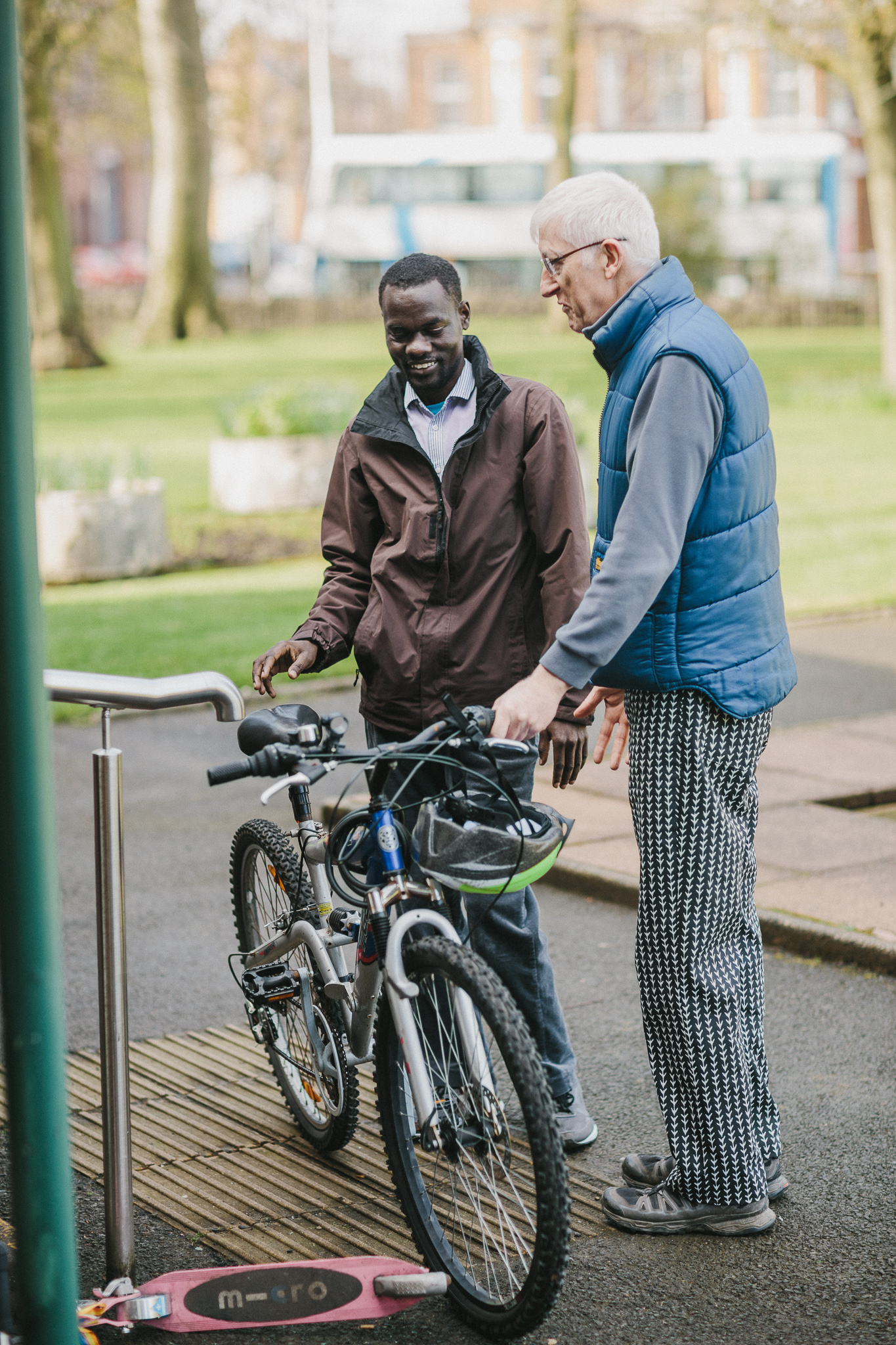
There is a lot of banter, teamwork and shared problem-solving – if someone doesn’t have the right skill or tool, the shout will go up and someone else can likely help. If you have brought something to get fixed, the chances are you will get to be part of the repair as well, find out how your item works and what to do if the problem recurs. Not everything can be fixed, but at least a diagnosis can usually be offered and some advice about what to do next. Some visitors bring projects in progress for advice, or want to learn to repair their lamp or darn their sock themselves, and that is welcomed.
Somehow, as people come together from all kinds of backgrounds for a common purpose, a bit of magic and a spirit of community emerges. You are a visitor, not a customer, whenever you have something precious enough to you to bring along and spend your Saturday morning on. The chat in the café or as you sit with your repairer is just as important as the repair itself. Often visitors and volunteers alike go away feeling restored, as well as with their repaired item. As one of the regular visitors put it: ‘You fix more than gadgets.’